Galaxy Defense: Fortress TD
- 4.5
- Rating
- 5.00M
- Installs
- Free
- Price

 Analysis by App-foxy
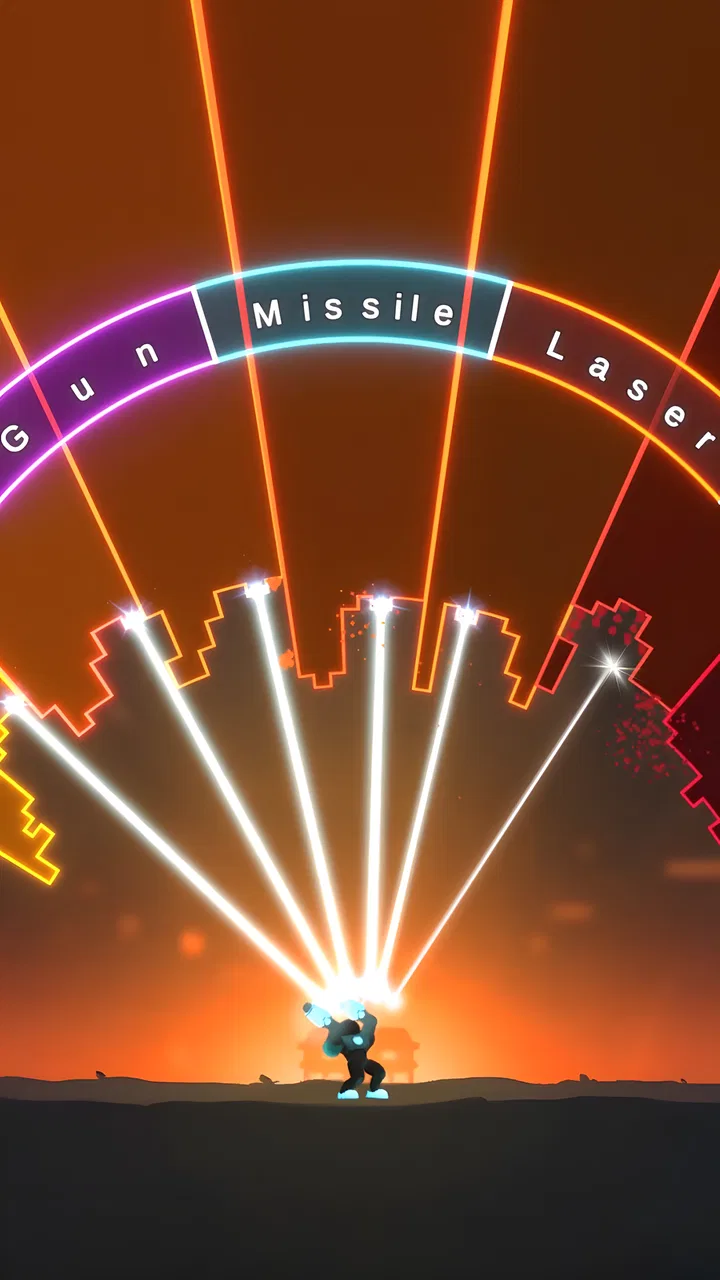
I spent time with Galaxy Defense: Fortress TD as a mobile strategy game, and my first impression was clear: it wants to make defending a planet against alien attacks feel easy to start but demanding enough to keep me thinking. The basic idea is familiar tower defense, yet the space setting gives each battle a stronger sense of purpose than a collection of disconnected lanes. I am placing defenses, watching enemy pressure build, and deciding whether to strengthen a reliable position or prepare for the next threat.
That accessibility is a major part of its appeal. CyberJoy Games has positioned the game for an Everyone audience, and the free entry point makes it simple to try without committing money first. It is available for devices running Android 7.0 or later, which also makes it approachable for people using older phones. The game has already passed one million installs and holds a 4.6 average from around 77 thousand ratings, so it is not an obscure experiment that only a handful of players have discovered.
How Galaxy Defense feels in its current state
The strongest part of the experience is the short decision cycle. I can look at a battlefield, identify the route enemies are following, and immediately make a meaningful choice about where to spend resources. That makes it suitable for a quick break, but the decisions are not completely mindless. A tower placed too early may leave a later section weak, while saving too long can allow a wave to reach the planet before the defense is ready.
You May Also Like

 Blood Strike: 2.5 Anniversary
Blood Strike’s Loadouts Turn Every Drop Into a Tactical Gamble
A close look at Blood Strike’s custom loadouts: how fast access to signature weapons reshapes its battle royale rhythm, rewards preparation, and narrows the gap between fights.

 Pandora - Music & Podcasts
Pandora’s Music Is Easy to Start, but Harder to Recover
Pandora’s strength is its low-effort path from a seed to a station. Its weak spot is how much confidence it asks you to place in connection, setup, and quiet recovery.

 8 Ball Pool
 Is Built on Rivalries, Rematches, and Routine
A close look at the rivalries, rematches, shared routines, and unanswered safety questions that turn a quick pool match into a persistent mobile community.

 Samsung Music
’s Quiet Strength Is Playing What You Already Own
Its reach comes less from spectacle than from dependable access to a personal library. That simplicity is both the app’s strongest retention engine and its ceiling.

 AccuWeather: Weather Radar
AccuWeather Review: A Quick, Clear Forecast for Everyday Decisions
For everyday plans, the best forecast is the one you can understand quickly. AccuWeather makes rain timing, radar, and local conditions easy to act on, with a few trade-offs.

 Hill Climb Racing
Why Hill Climb Racing Still Turns Crashes Into One More Run
A tiny car, a bumpy hill and one more upgrade: Hill Climb Racing keeps resurfacing because its simple chaos makes every near-miss feel personal.
More From Our News Desk



I particularly like the way the science-fiction theme supports the strategy instead of merely decorating it. Alien attacks give the battles a clear reason to escalate, and the fortress concept makes defensive preparation feel natural. I am not simply clearing abstract shapes from a path; I am protecting a location that should survive a sustained assault. That framing helps the game feel more focused than many generic tower defense titles.
Still, players should understand what kind of strategy this is. It is not a grand strategy game with diplomacy, a large map, or long-term political management. It is a focused defense game built around battlefield choices. If you enjoy studying enemy routes, improving placement, and reacting to pressure, the format should feel comfortable. If you want a deep space empire simulator, this is the wrong direction.
The first sessions are easy to understand
I found the opening experience friendly because the central loop does not need a long explanation. The battlefield communicates the immediate problem: enemies are approaching, defensive positions matter, and every upgrade should serve survival. That makes it a reasonable choice for someone who has not played much tower defense before.
The simplicity also makes it work well on a phone. I can play while waiting for an appointment or during a short commute, provided I am somewhere I can pay attention to the screen. This is not a game I would leave running while doing something else. A poorly timed decision can matter, so it rewards brief, active sessions rather than passive background play.
One useful habit is to avoid spending everything as soon as a battle begins. I get better results when I first observe how the route and early enemies behave, then invest in the position that is actually carrying the defense. That small pause prevents a common mistake in tower defense: building an impressive front line while leaving the final approach vulnerable.
What the current version tells me about its direction
The current version is 0.14.2, which is important context when judging the game. It suggests a product that is still in an active stage of development rather than a completely settled strategy package. I treat that as both an opportunity and a warning. The opportunity is that the game can continue to become more varied and refined. The warning is that balance, pacing, and progression may not yet feel as mature as they do in long-established alternatives.
The release date was April 21, 2025, so I would not approach it expecting years of accumulated content or a perfectly polished endgame. My experience is better when I judge it as a developing mobile defense game: the central loop needs to be enjoyable now, while future updates are a bonus rather than a promise. That distinction matters because no player should install a game solely for features they hope will arrive later.
For existing players, the version number also changes how I interpret rough edges. A stage that feels repetitive or a progression step that seems uneven may reflect an experience still being tuned. That does not make the friction disappear, but it does help explain why some parts may feel more confident than others. I would keep the game installed if I enjoyed the core battles, while accepting that its long-term shape may continue to change.
Where the strategy becomes more interesting
The most useful advanced skill is not simply upgrading the strongest-looking defense. It is learning to match investment to the timing of danger. A powerful position near the beginning can handle early pressure, but if it consumes the resources needed for the last stretch, the whole plan can collapse. I prefer a balanced setup: enough early control to avoid panic, followed by deliberate reinforcement where enemies are most likely to survive.
Another practical insight is to think about failure as information. When a defense breaks, I do not immediately repeat the same layout with more spending. I ask whether the problem was poor placement, late investment, or a weakness at the end of the route. This approach makes retries more useful and reduces the feeling that progress depends only on grinding.
I also recommend changing one decision at a time when replaying a difficult battle. If I move every defense and alter every upgrade, I cannot tell what improved the result. Keeping most of the plan intact while changing one key placement gives a clearer answer. That is a small workflow, but it makes the strategy feel more deliberate and helps players improve rather than simply hope for a better outcome.
How it compares with familiar tower defense choices
Compared with a traditional fantasy tower defense game, this one trades some of the usual medieval flavor for alien threats and planetary defense. That makes it a better fit for players who want a science-fiction mood without learning a large fictional universe. The structure remains approachable, so someone moving from another lane-defense game should understand the basic rhythm quickly.
Compared with deeper strategy titles, the advantage is convenience. I do not need to reserve a long evening or remember a complicated campaign economy before I can enjoy a battle. The trade-off is depth. Players who want extensive unit customization, elaborate maps, or a campaign that constantly changes its rules may eventually find the format narrow.
It also differs from idle defense games. I get more value from paying attention and making choices than from simply collecting rewards between visits. That is good news if you want your decisions to matter, but less appealing if your ideal mobile game progresses mostly while you are away. I would choose this over an idle alternative when I want a short tactical activity, and choose the idle option when I want minimal interaction.
The free price makes the comparison more complicated. Anyone can test the main appeal without paying upfront, but in-app purchases range from $2.99 to $349.99 per item. That broad range is a reason to be careful with spending, especially for younger players or anyone who tends to buy impulsively during a difficult stage. I would first decide whether the unpurchased experience is enjoyable enough on its own, then set a personal limit before considering optional purchases.
Who will get the most from it
I would recommend it to someone who likes compact strategy sessions, science-fiction settings, and the satisfaction of improving a defense after a failed attempt. It is also a sensible starting point for a friend who finds complex strategy games intimidating but still wants more involvement than tapping through an idle app.
A realistic everyday use case is a ten-minute break between tasks. I can play a battle, notice one weak point, and leave with a clear idea for the next attempt. That is more satisfying than a game that only offers a reward screen, yet it does not demand the long uninterrupted commitment of a large console-style strategy campaign.
It may also suit families looking for a game with an Everyone content rating, although I would still supervise purchases on a shared device. The age rating describes the content audience, not whether every spending decision is appropriate for every player. The free download lowers the barrier to entry, but the purchase range means household controls and a conversation about spending are sensible.
Who should probably skip it
I would skip it if I wanted a highly narrative science-fiction adventure, because the appeal here is defense planning rather than character-driven storytelling. I would also look elsewhere if I needed a completely offline-friendly experience, extensive competitive systems, or a guaranteed feeling of endless variety. Those expectations can make a focused tower defense game feel smaller than it intends to be.
Players who dislike repeating stages may also become frustrated. Improving a layout after failure is part of the pleasure for me, but it can feel like a chore if I want every attempt to introduce something completely new. Likewise, anyone uncomfortable with in-app purchase ranges should approach the free model cautiously and avoid treating optional spending as the normal solution to difficulty.
Practical advice before committing
My advice is to begin with a no-spend trial. Play enough to decide whether the placement-and-upgrade loop itself is enjoyable, rather than judging the game by how quickly progress can be accelerated. If a stage feels difficult, first adjust the order and location of defenses. Buying something should not be the first troubleshooting step.
Keep an eye on the version shown on your device as the game evolves. Because the current build is 0.14.2 and the release is relatively recent, returning players may notice changes in balance or pacing over time. I would welcome that evolution, but I would also keep expectations grounded: an update can improve the foundation without instantly turning a compact defense game into a much larger genre hybrid.
For phone storage and performance, the minimum operating system is Android 7.0 or later, so the compatibility requirement is modest. That does not guarantee identical performance on every device, but it does make the game relevant to people who are not using the newest hardware. I would still close other demanding apps before a longer session if the phone is older or already running hot.
What I would watch as the game develops
The most important future question is whether the game can keep its battles strategically fresh without losing the approachable structure that makes it easy to start. I would like to see the existing defense decisions remain meaningful as the game expands, rather than having new content simply add more upgrades to purchase.
I would also watch how CyberJoy Games handles balance. A good update should make different defensive approaches viable, not create one obvious solution that every player must copy. The best sign would be a game where careful observation, placement, and timing continue to matter more than simply selecting the most expensive option.
Progression is another area worth following. Since the game is still young, its long-term rhythm will determine whether it becomes a dependable daily strategy game or a pleasant title that players finish and move on from. I would prefer measured development that improves variety and clarity over changes that make the game feel busier without making it deeper.
My final take on the planetary defense loop
After playing it, I see Galaxy Defense: Fortress TD as an accessible, focused strategy game with a useful science-fiction identity. Its best quality is the way it turns short sessions into small planning exercises: observe the route, protect the weak point, spend carefully, and learn from failure. That is enough to make it enjoyable without pretending to be a full-scale strategy epic.
The limitations are just as clear. The game is developing, the long-term depth may not satisfy demanding strategy fans, and the in-app purchase range deserves deliberate handling. I would not recommend it to someone looking for a story-heavy space game or an almost automatic idle experience.
For everyone else, the free entry point makes trying it straightforward. My recommendation is to approach it as a compact tower defense game that rewards attention, not as a promise of unlimited content. If you enjoy the first battles without spending, the current version offers a worthwhile way to fill short breaks. The real test is whether you enjoy improving your decisions, not merely watching the fortress survive.
FAQs for Galaxy Defense: Fortress TD
01What is the main objective of Galaxy Defense: Fortress TD?
In Galaxy Defense: Fortress TD, the main objective is to protect your base from waves of enemy attacks. Players must strategically place defensive towers and upgrade them to withstand increasingly challenging waves. The game combines elements of strategy and resource management to provide an engaging tower defense experience.
02Are there different types of towers available in the game?
Yes, Galaxy Defense: Fortress TD offers a variety of towers, each with unique abilities and strengths. Players can choose from laser towers, missile launchers, and energy cannons, among others. Each tower can be upgraded to enhance its power, range, and firing speed, allowing for strategic customization to suit different levels and enemies.
03Does Galaxy Defense: Fortress TD include multiplayer features?
No, Galaxy Defense: Fortress TD is primarily a single-player experience focused on strategy and tower defense. However, it includes leaderboards where players can compare their scores with others globally. This feature adds a competitive edge, encouraging players to improve their strategies and achieve higher rankings.
04Is Galaxy Defense: Fortress TD free to play, and are there in-app purchases?
Galaxy Defense: Fortress TD is free to download and play. It includes optional in-app purchases that allow players to buy in-game currency or special items to enhance their gameplay experience. While these purchases can provide advantages, they are not necessary to progress through the game, ensuring a fair experience for all players.
05What are the system requirements for Galaxy Defense: Fortress TD?
Galaxy Defense: Fortress TD is compatible with both Android and iOS devices. For Android, it requires version 4.4 or higher, and for iOS, it needs iOS 10.0 or later. The game is optimized for smooth performance on a wide range of devices, ensuring an enjoyable gameplay experience without significant lag or technical issues.
Pros
- Intuitive controls make gameplay smooth.
- Variety of levels keeps it engaging.
- Stunning graphics enhance experience.
- Strategic depth in tower upgrades.
- Regular updates with new content.
Cons
- Ads can interrupt gameplay.
- In-app purchases are pricey.
- Requires constant internet connection.
- Battery consumption is high.
- Learning curve might frustrate beginners.

Galaxy Defense: Fortress TD
Gallery